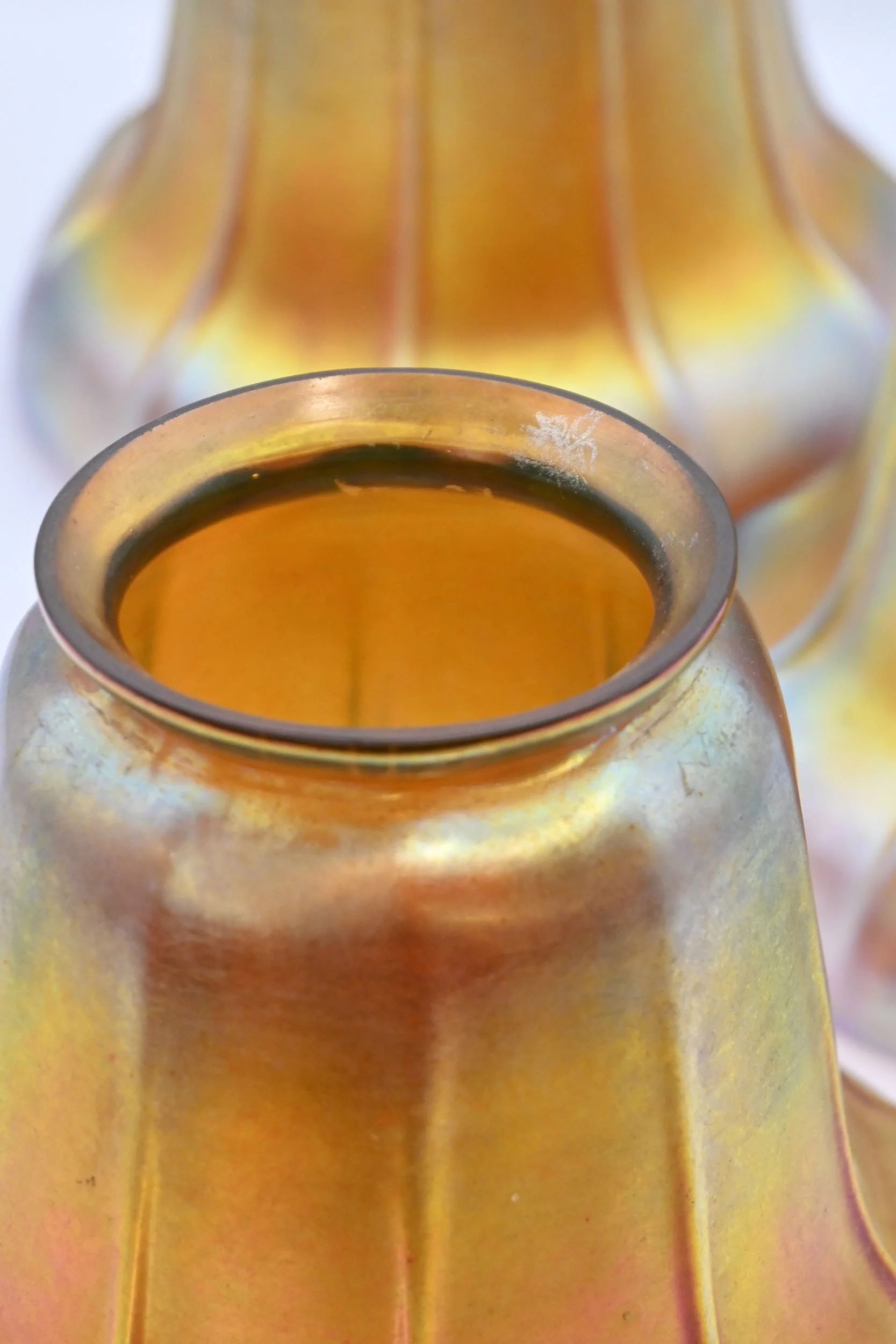
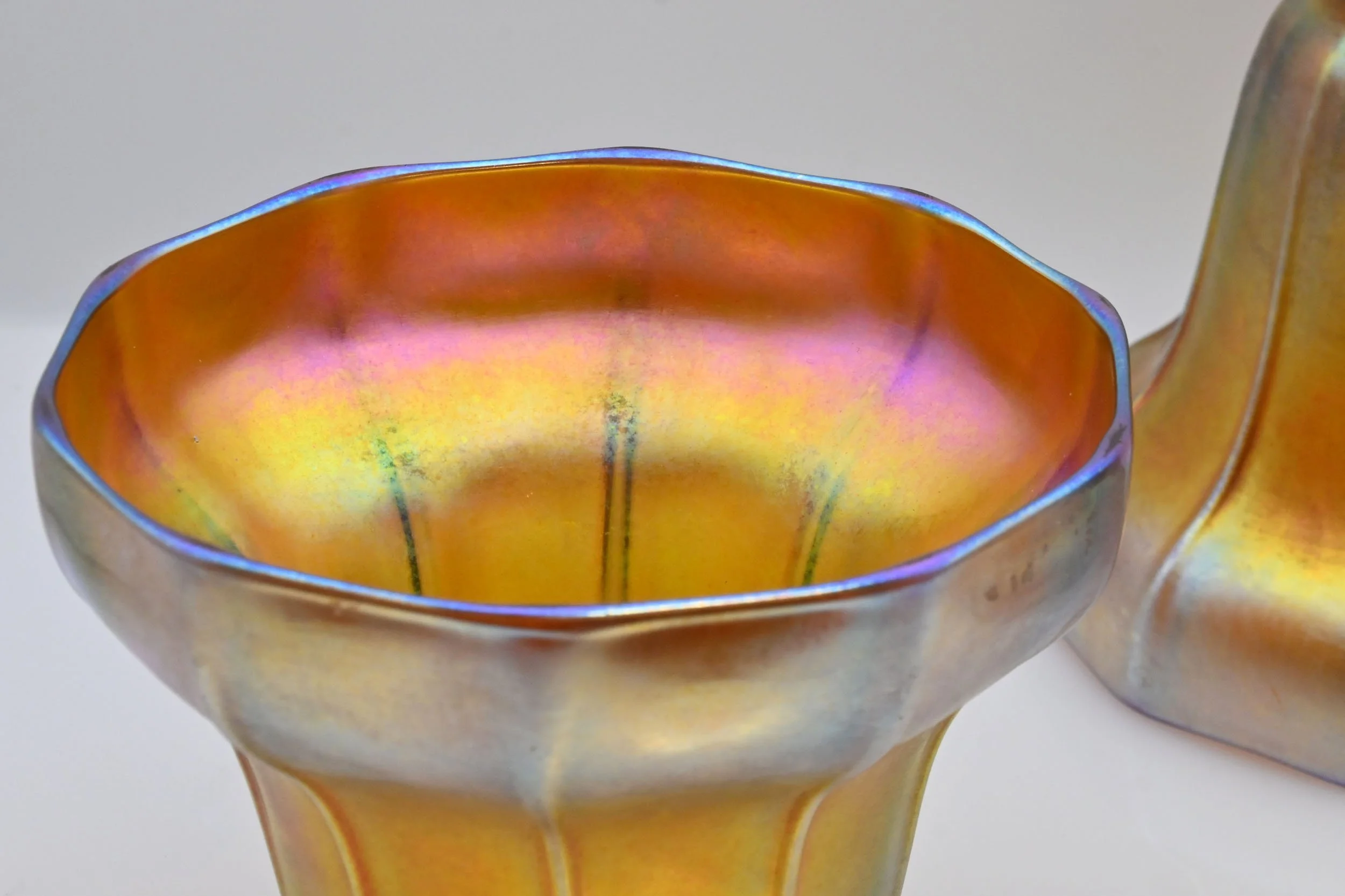
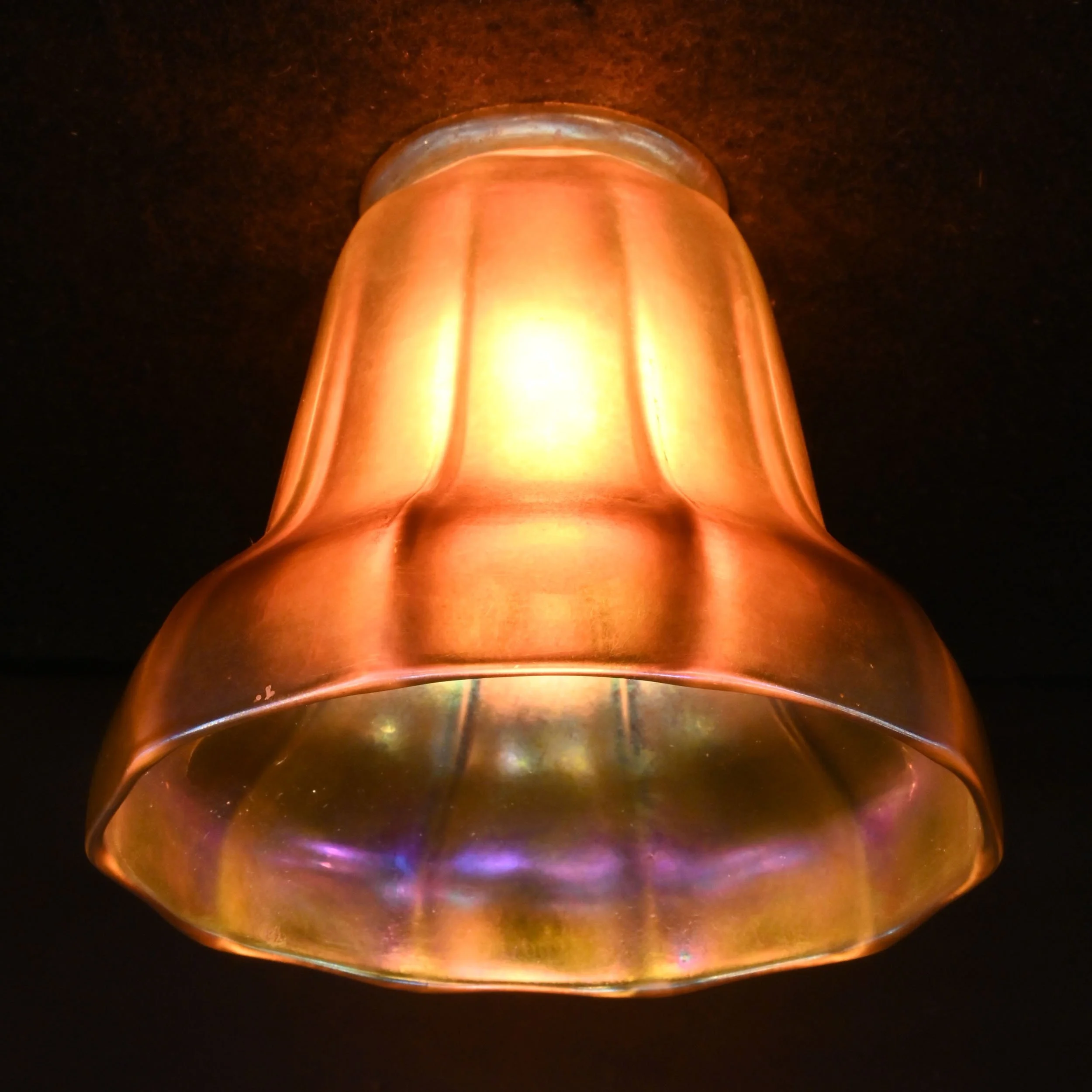
 Image 1 of 1
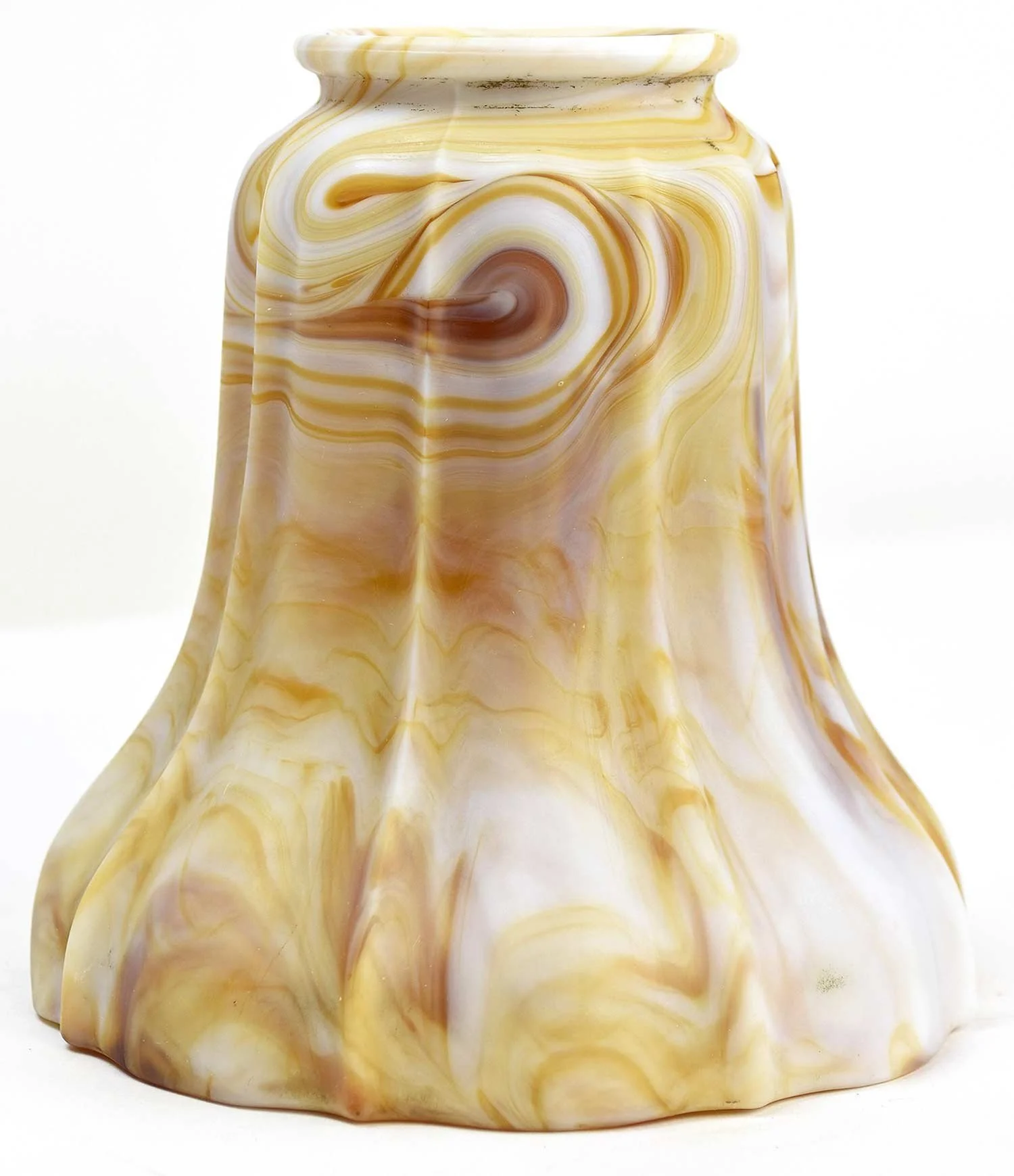
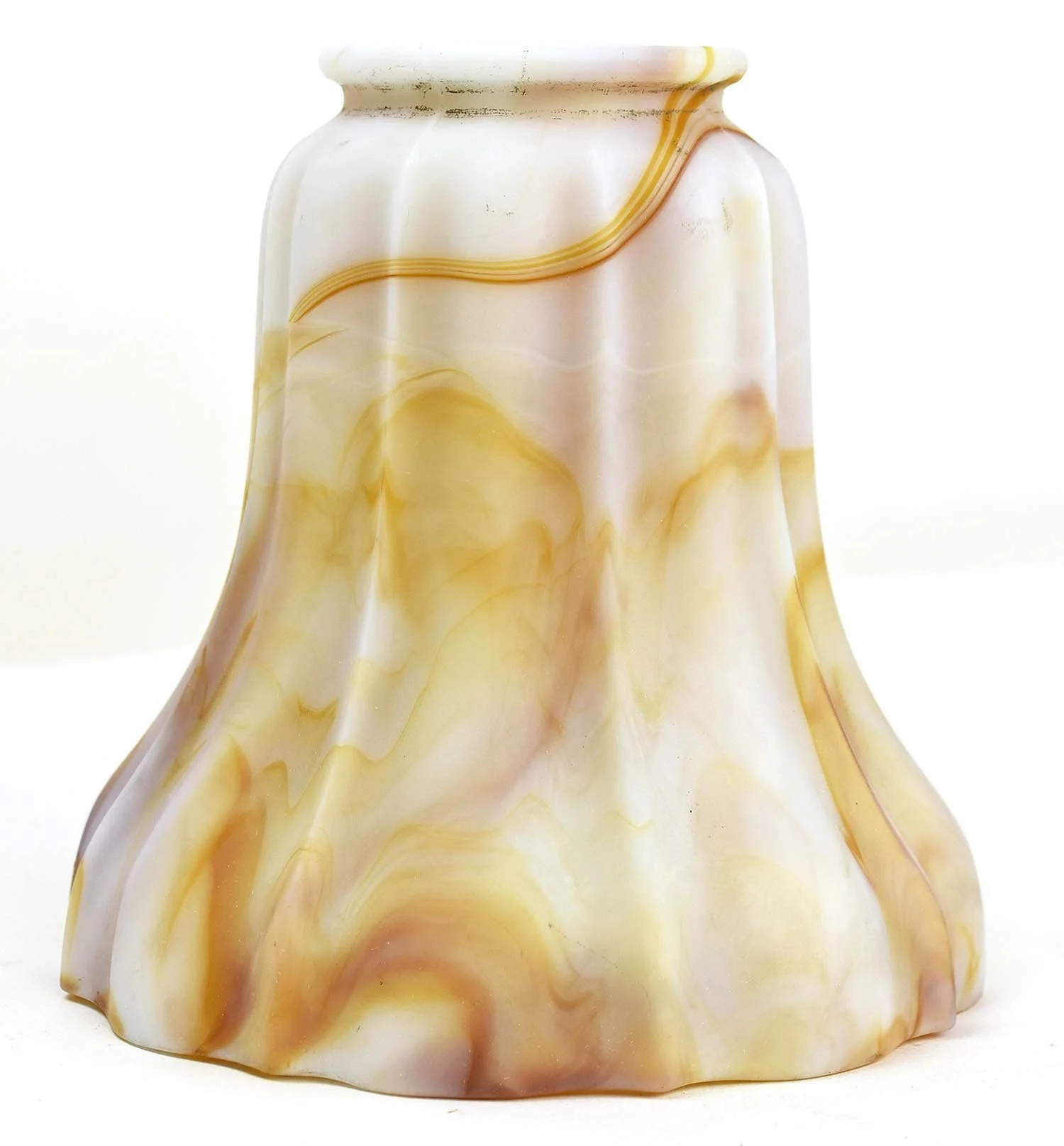
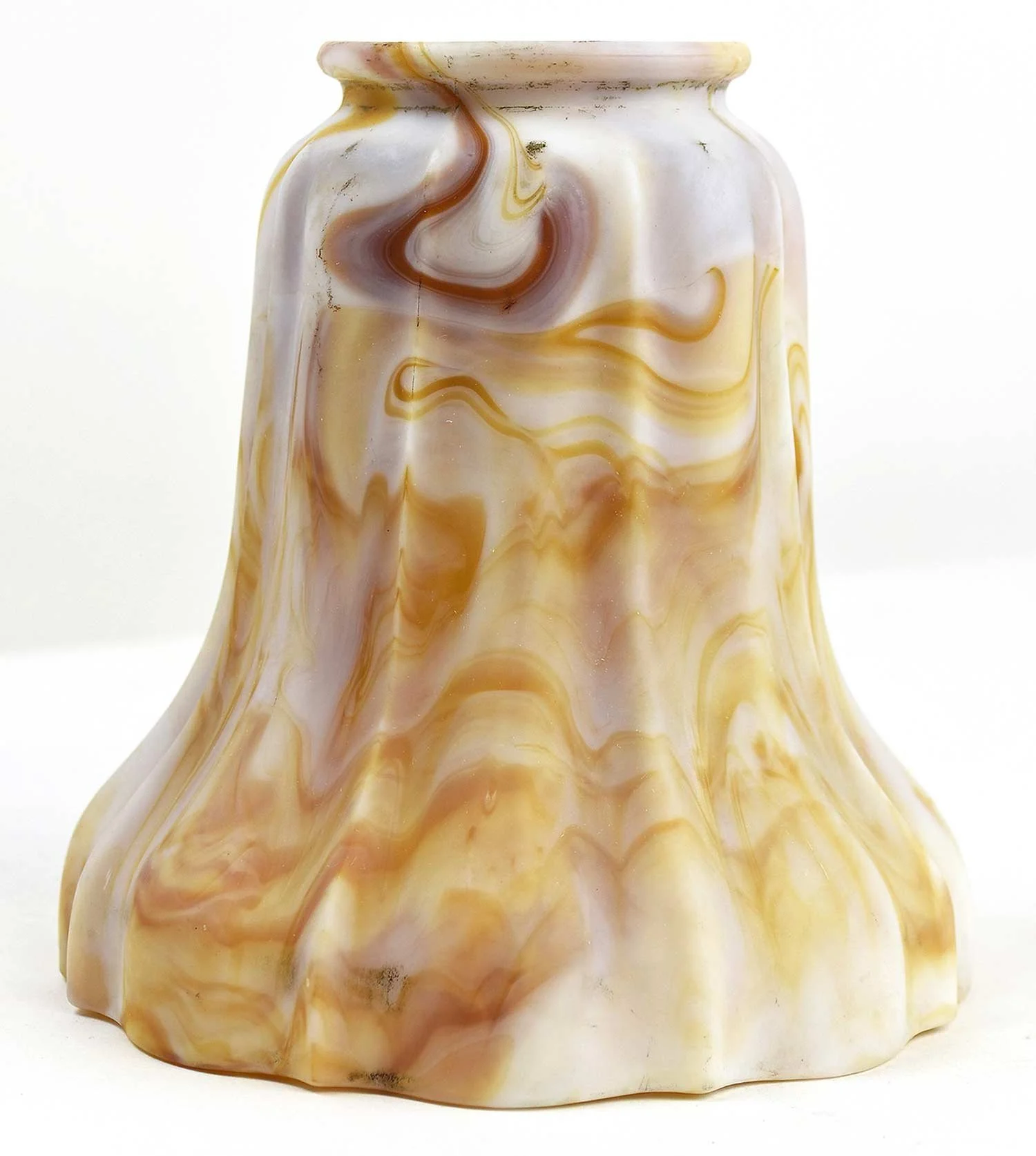
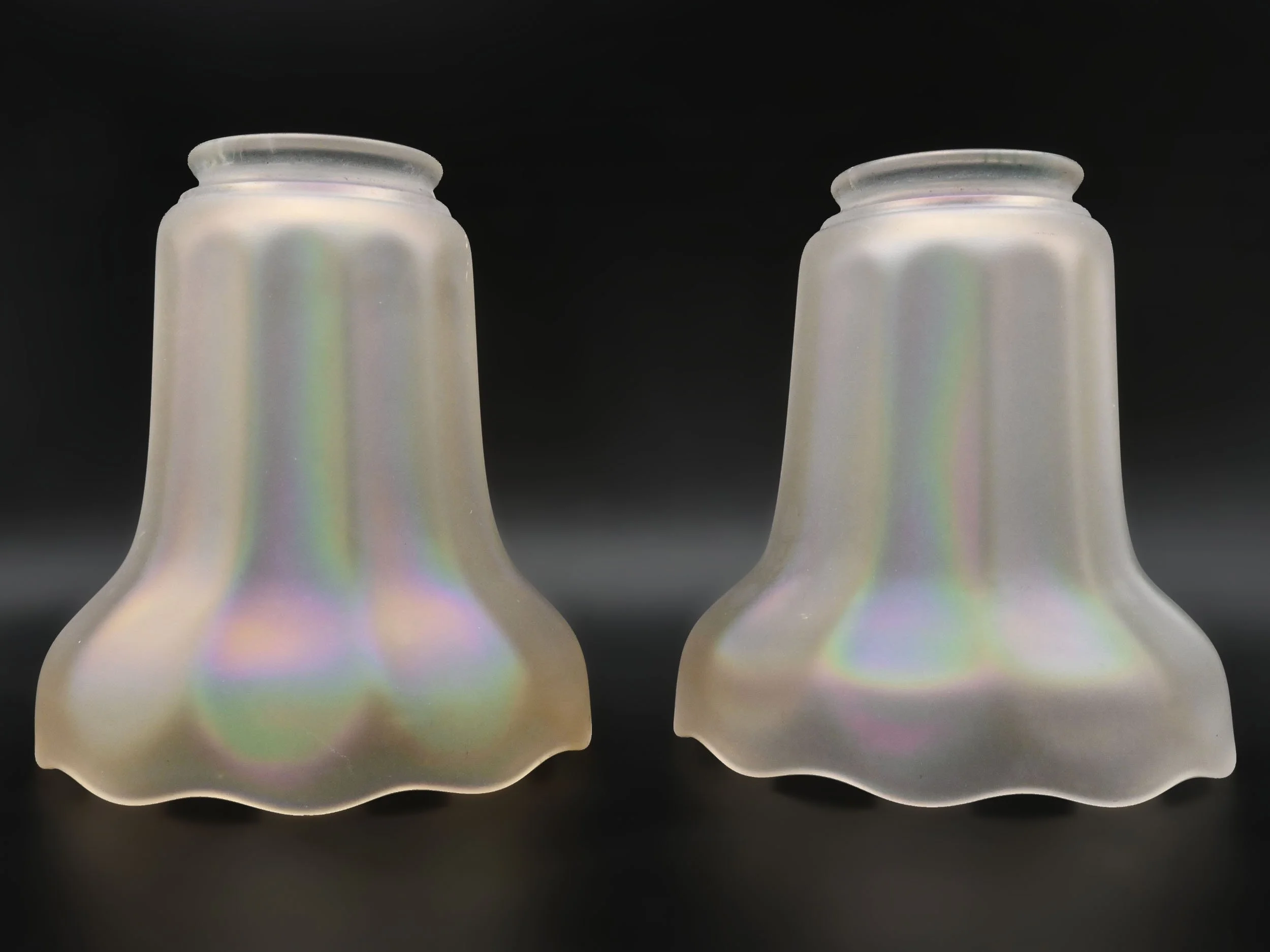
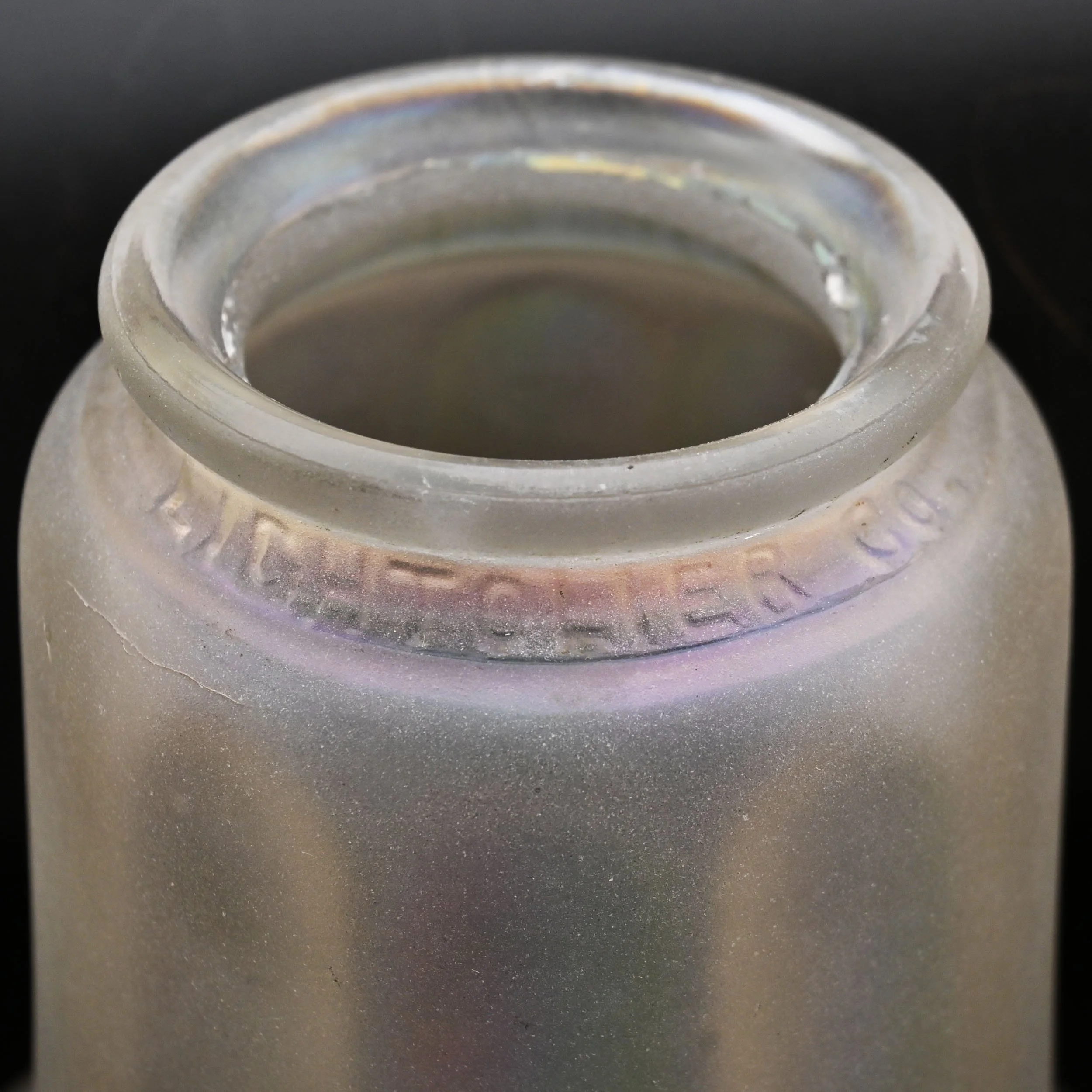
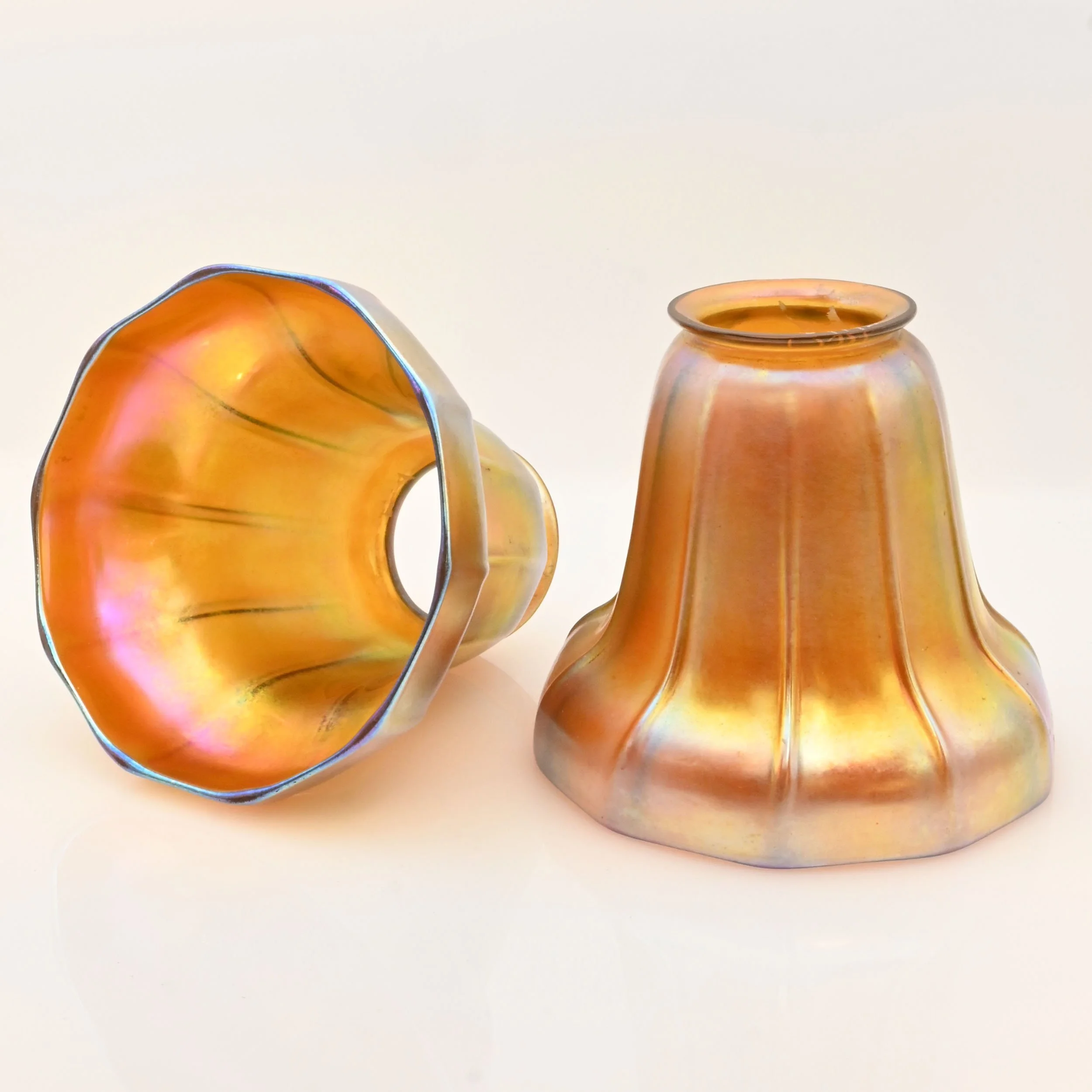
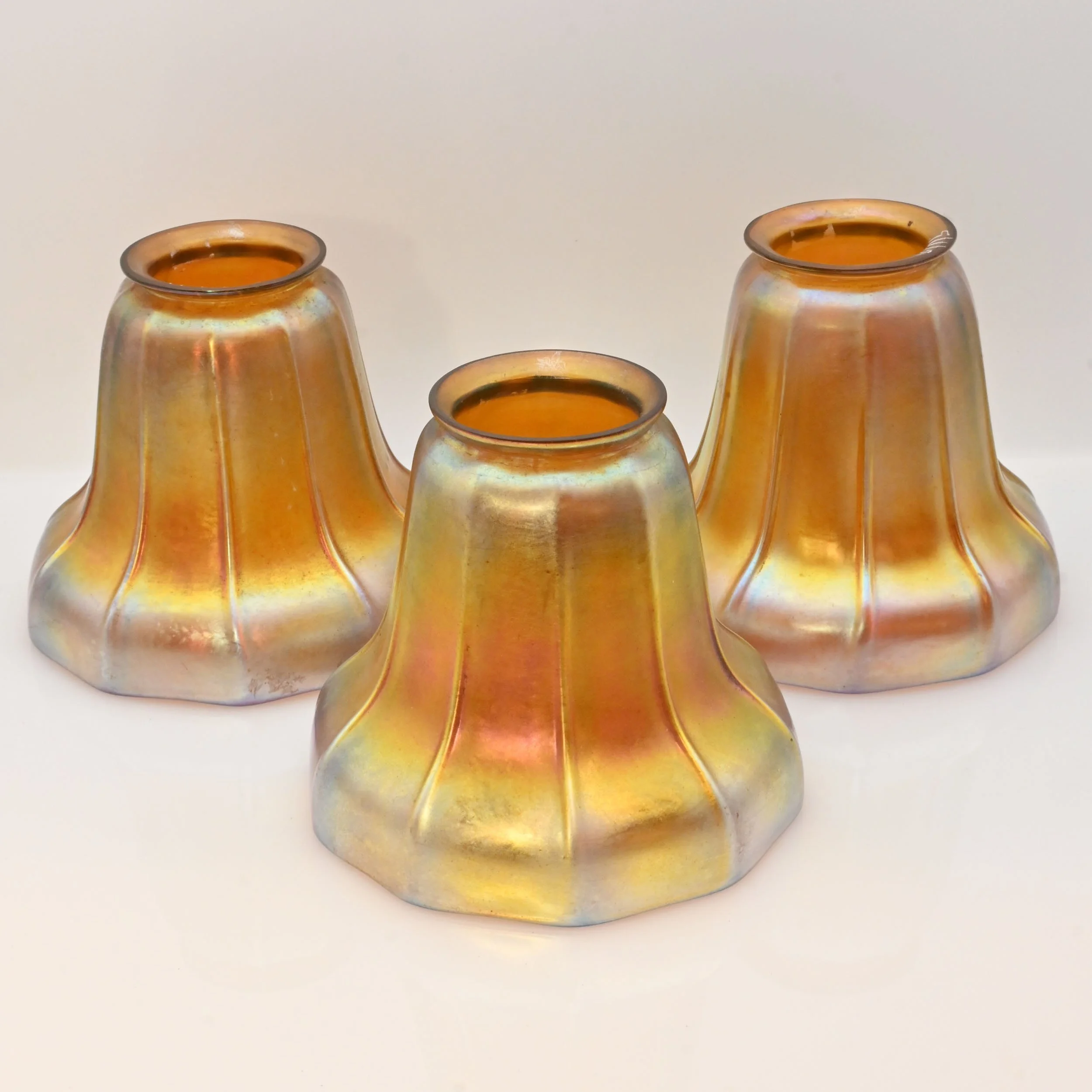
Circa: xxxxx
Condition: Age Consistent / REWIRED
Material: xxxxx
Finish: Original
Origin: USA, maker
Dimensions: xxxxx
Steuben Glass WorksFrederick Carder began carving glass, stone, modeling pottery & sculptural terra-cotta in England. He became enamored with glassmaking and was determined to get into the business of glassmaking, so after coming to America Carder founded Steuben Glass Works in the year 1903 perfecting and registering the name Aurene Glass. In 1918 Steuben Glass Works became the Steuben Division of Corning Glass Works, but continued to produce colored art glass until its last known sale in 1943.
LUSTRE ART COMPANY The glass manufacturing network from the late 19th and early 20th centuries was quite interconnected, with many artisans leaving firms to start their own, or being influenced by the work of their contemporaries. Lustre Art Company was no different. Founded by Conrad Valshing, former vice President of Quezal Art Glass and the son-in-law of Quezel’s owner, and Paul Frank, a glass gaffer from Quezal. They brought many designs from Quezal into this new company, making the two firms’ work hard to distinguish. Because the company only lasted for three years, finding a verified Lustre Art piece is quite rare.
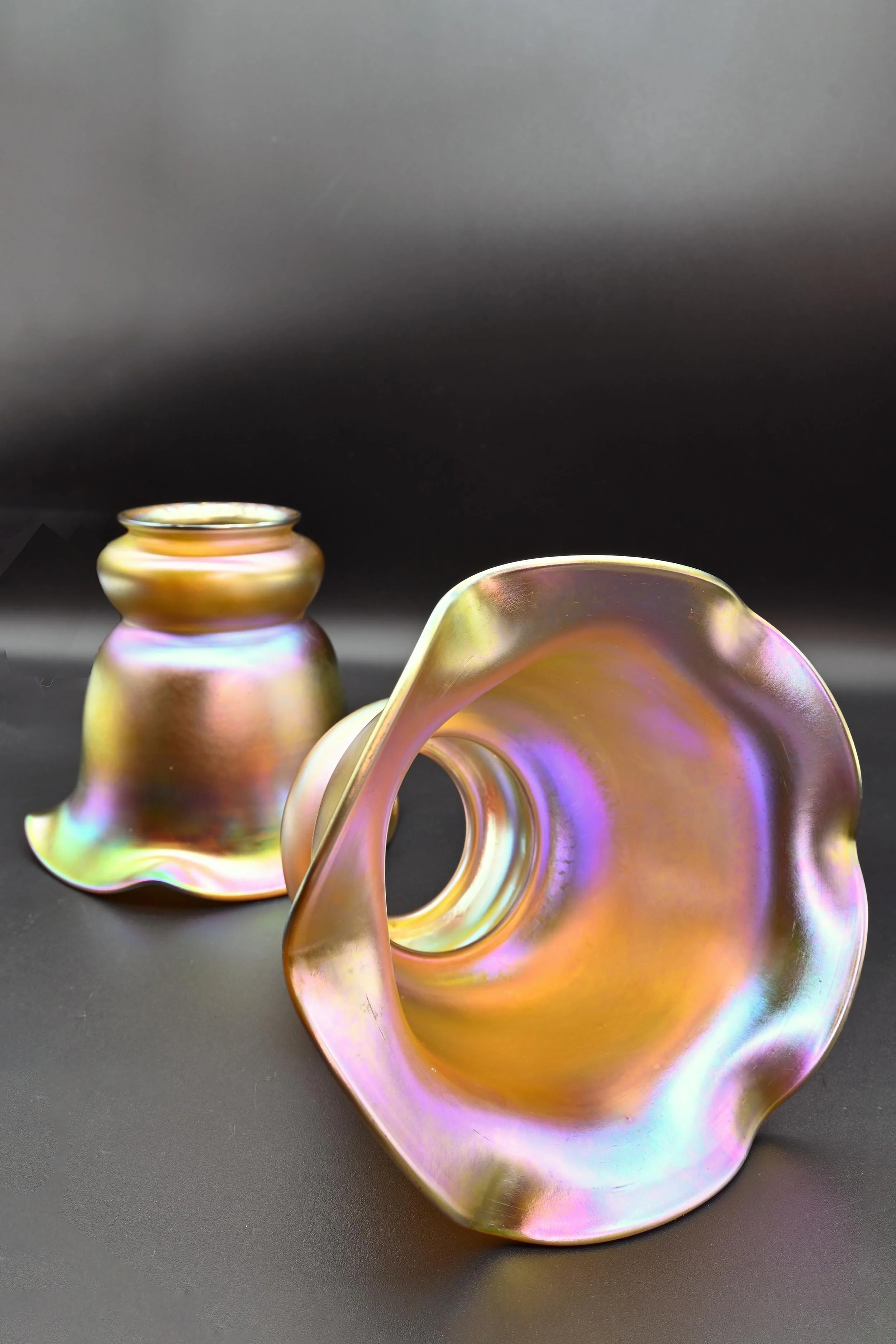
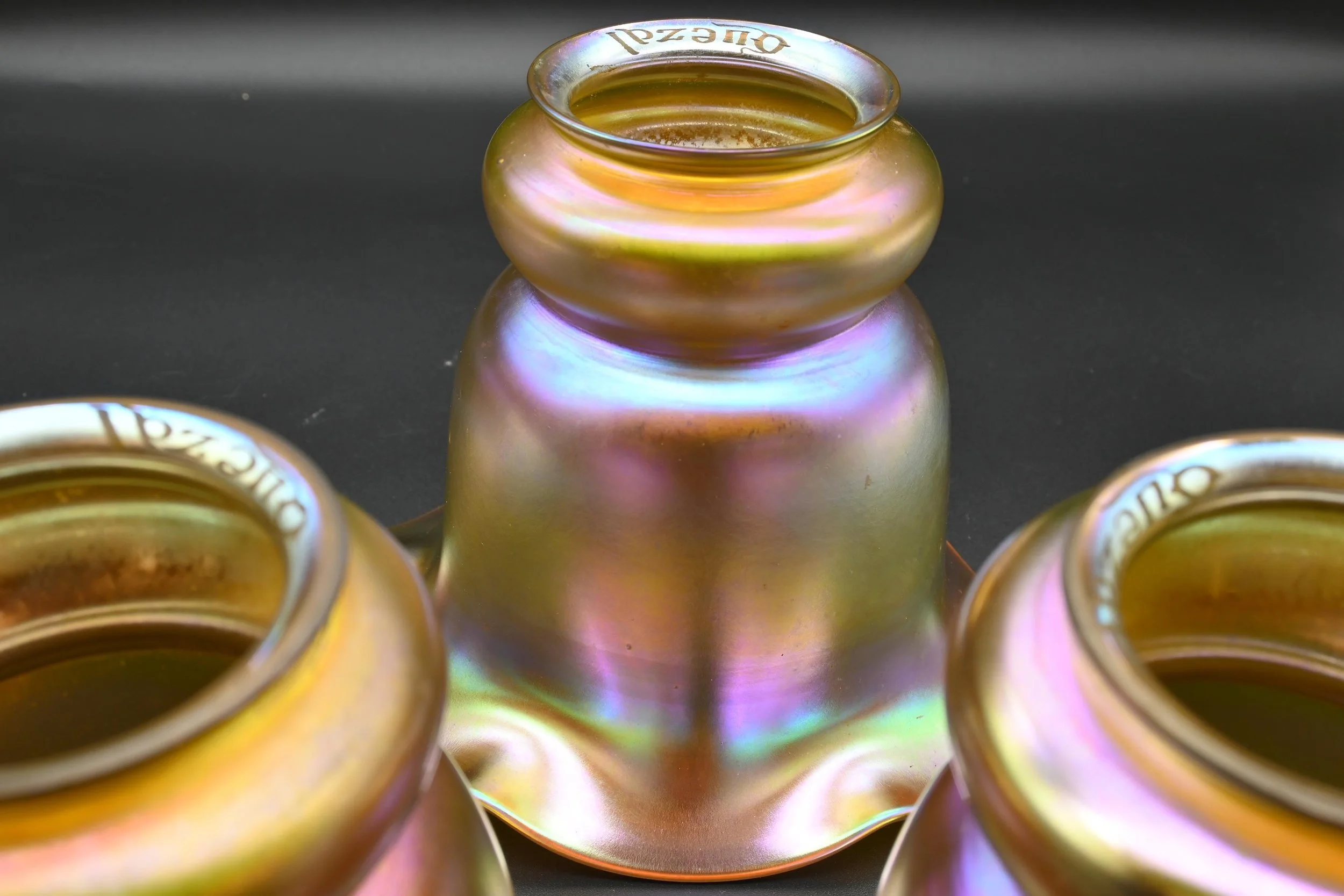
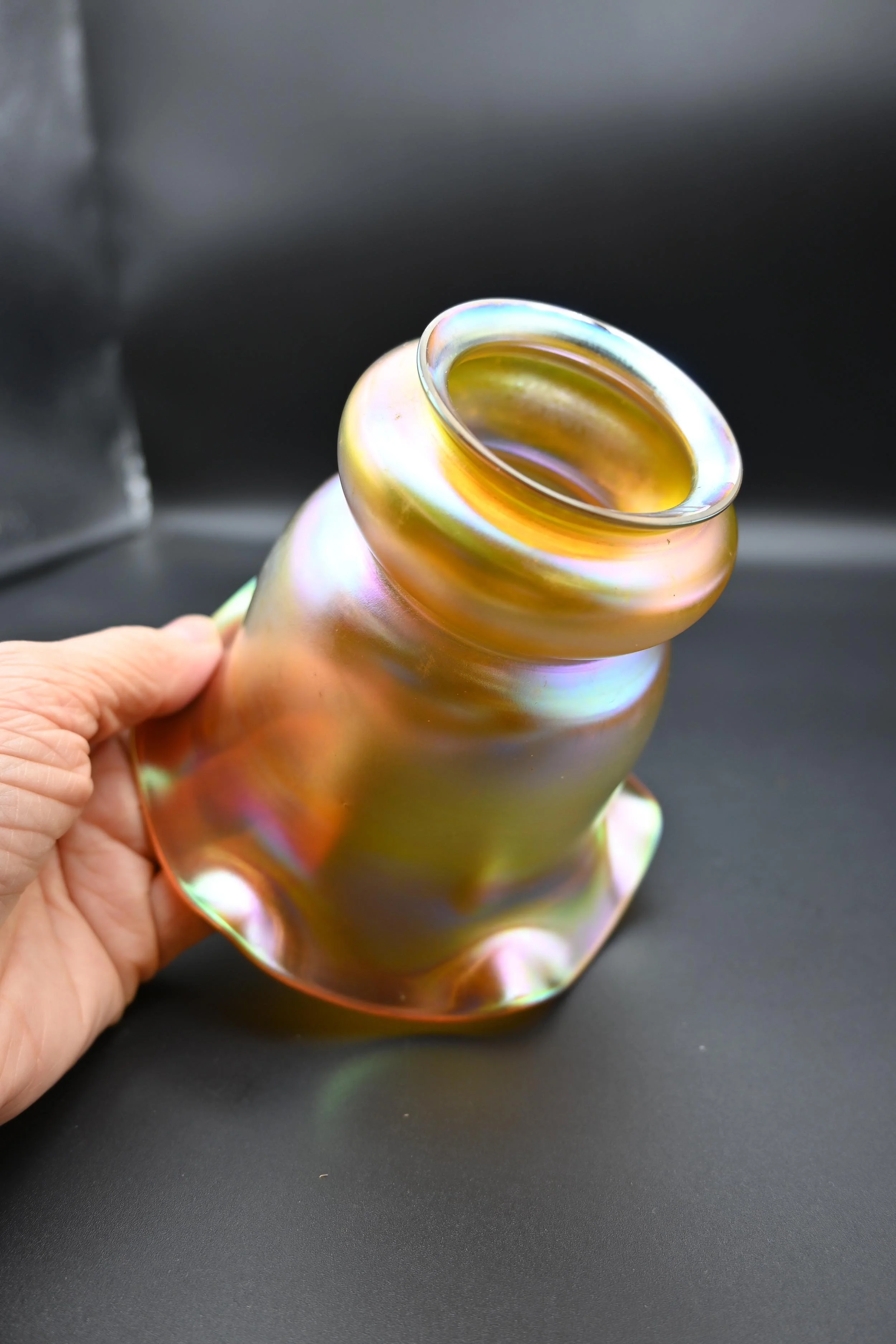
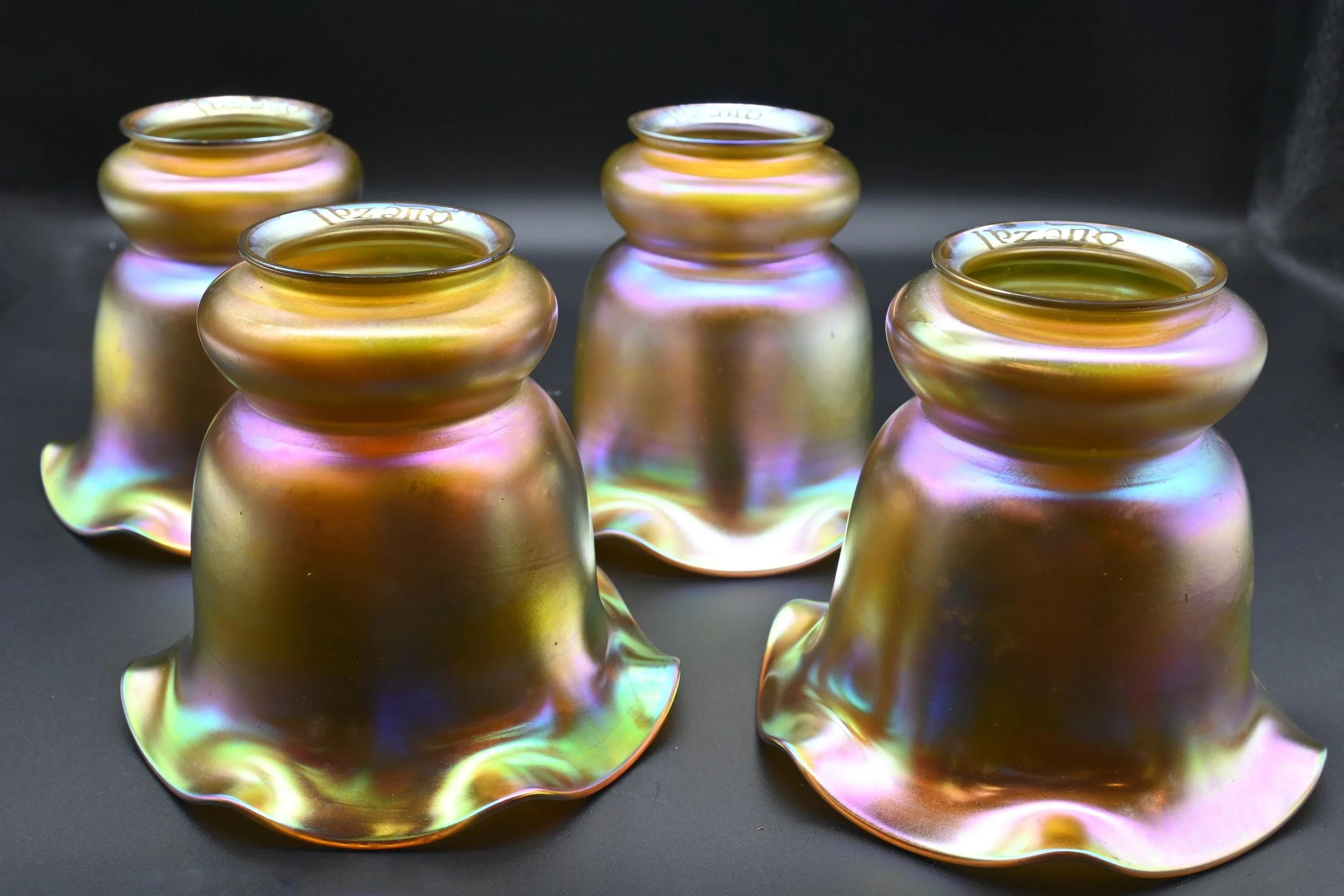
Quezal Art Glass and Decorating Company Many of the glass manufacturers from the late 19th and early 20th centuries had ties to one another, whether from working together or for each other, and Quezal is a perfect example of the era's interconnectedness. The firm was founded in 1901 by Martin Bach Sr, Thomas Johnson, Nicholas Bach, Lena Scholtz, and Adolph Demuth, many of them former Tiffany employees. Their work was notable for its use of bold iridescent colors, such as blue, gold, purple, and green. From the beginning Quezal was considered the first real competition for Tiffany. They soon had their own competition though, when two of its employees branched out and started their own firm, Lustre Art Company! Eventually Martin Bach Sr. became the majority owner in the company, and when he died in 1921 his son took over. Martin Bach Jr was not as adept as a businessman, however, and Quezal closed in 1924. Even with a couple of decades worth of inventory, Quezal kept its production limited compared to their contemporaries, so the surviving pieces are sometimes hard to come by.
TIFFANY & COMPANY One might think that being born into such a notable family as Tiffany would encourage Louis Comfort Tiffany to join the family business, Tiffany & Co., but he was intent on making his own mark in the world. He established his own glassware firm in 1885, focusing on new glass manufacturing methods. Tiffany had patented an opalescent window glass several years earlier, which could be created by combining and manipulating several colors to produce a range of hues and three dimensional effects. Heavily influenced by the arts and crafts movement, Tiffany felt very strongly that nature should be the primary source fof design inspiration. This is evident in the brilliant colors and his preference for glass with slight imperfections. Today, his designs are still highly sought-after, and represent some of the best glass manufacturing in the late 19th and early 20th centuries
We offer fully insured double-boxed shipping within the continental United States. Shipping will be calculated at checkout. For items requiring freight or blanket-wrap delivery, please contact us for a quote.
Circa: xxxxx
Condition: Age Consistent / REWIRED
Material: xxxxx
Finish: Original
Origin: USA, maker
Dimensions: xxxxx
Steuben Glass WorksFrederick Carder began carving glass, stone, modeling pottery & sculptural terra-cotta in England. He became enamored with glassmaking and was determined to get into the business of glassmaking, so after coming to America Carder founded Steuben Glass Works in the year 1903 perfecting and registering the name Aurene Glass. In 1918 Steuben Glass Works became the Steuben Division of Corning Glass Works, but continued to produce colored art glass until its last known sale in 1943.
LUSTRE ART COMPANY The glass manufacturing network from the late 19th and early 20th centuries was quite interconnected, with many artisans leaving firms to start their own, or being influenced by the work of their contemporaries. Lustre Art Company was no different. Founded by Conrad Valshing, former vice President of Quezal Art Glass and the son-in-law of Quezel’s owner, and Paul Frank, a glass gaffer from Quezal. They brought many designs from Quezal into this new company, making the two firms’ work hard to distinguish. Because the company only lasted for three years, finding a verified Lustre Art piece is quite rare.
Quezal Art Glass and Decorating Company Many of the glass manufacturers from the late 19th and early 20th centuries had ties to one another, whether from working together or for each other, and Quezal is a perfect example of the era's interconnectedness. The firm was founded in 1901 by Martin Bach Sr, Thomas Johnson, Nicholas Bach, Lena Scholtz, and Adolph Demuth, many of them former Tiffany employees. Their work was notable for its use of bold iridescent colors, such as blue, gold, purple, and green. From the beginning Quezal was considered the first real competition for Tiffany. They soon had their own competition though, when two of its employees branched out and started their own firm, Lustre Art Company! Eventually Martin Bach Sr. became the majority owner in the company, and when he died in 1921 his son took over. Martin Bach Jr was not as adept as a businessman, however, and Quezal closed in 1924. Even with a couple of decades worth of inventory, Quezal kept its production limited compared to their contemporaries, so the surviving pieces are sometimes hard to come by.
TIFFANY & COMPANY One might think that being born into such a notable family as Tiffany would encourage Louis Comfort Tiffany to join the family business, Tiffany & Co., but he was intent on making his own mark in the world. He established his own glassware firm in 1885, focusing on new glass manufacturing methods. Tiffany had patented an opalescent window glass several years earlier, which could be created by combining and manipulating several colors to produce a range of hues and three dimensional effects. Heavily influenced by the arts and crafts movement, Tiffany felt very strongly that nature should be the primary source fof design inspiration. This is evident in the brilliant colors and his preference for glass with slight imperfections. Today, his designs are still highly sought-after, and represent some of the best glass manufacturing in the late 19th and early 20th centuries
We offer fully insured double-boxed shipping within the continental United States. Shipping will be calculated at checkout. For items requiring freight or blanket-wrap delivery, please contact us for a quote.